

CASE STUDY: Research on the Visual Search Behavior and Decision-Making Ability of Basketball Referees
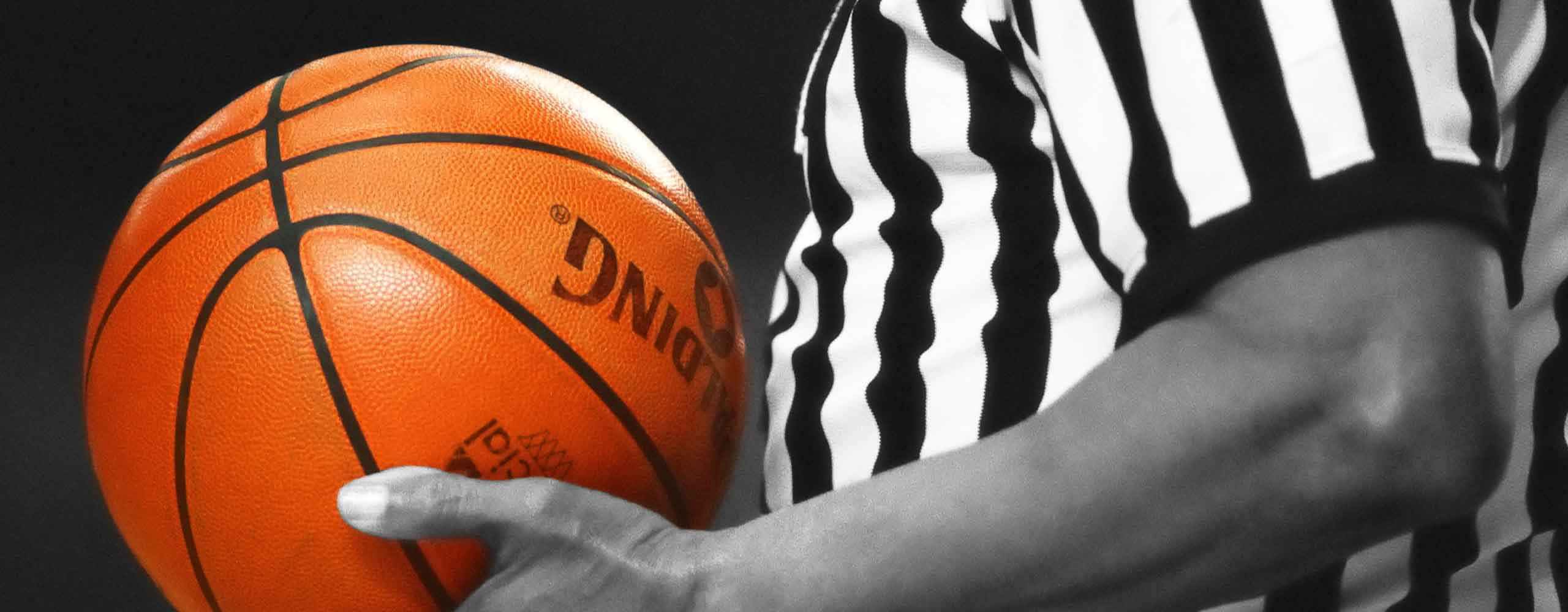
In fast-paced sports like basketball, referees must process complex physical interactions and make split-second foul calls under immense pressure. A study published in Frontiers in Psychology by Rishu Wang, Long Chen, Yidong Wu, and Qi Zhang investigated how refereeing expertise influences visual search strategies and decision-making accuracy. To uncover how elite officials process visual cues, researchers used an EyeLink eye tracker to monitor gaze dynamics in real time.
The Methodology: Simulating Real-World Refereeing
The study compared two groups: 10 expert referees officiating in top-level professional leagues and 10 non-expert university referees. Participants watched 10 silent video clips filmed directly from the lead referee’s perspective during high-level basketball games. Each clip contained a potential foul or violation.
An EyeLink Portable Duo system recorded exact gaze fixations and eye movement patterns while participants evaluated each play. Immediately after viewing a clip, participants selected a decision (e.g., defensive foul, traveling, or no call).
Differences Between Elite and College Referees
Researchers categorized gaze locations into Central Areas (torso/arms of ball-handler and defender), Outer Areas (lower limbs and assist defenders), and Invalid Areas (irrelevant players).
- Superior Accuracy: Expert referees achieved significantly higher decision-making accuracy (78%) compared to non-experts (46%).
- Focused Attention: Experts spent 80.4% of their fixation time focused on the central action area, whereas non-experts spent only 53%. Non-experts diverted far more visual attention to outer and invalid areas.
- No Difference in Search Volume: Interestingly, total fixation counts and average fixation durations were nearly identical between groups. Experts do not necessarily look more or longer; they simply know where to look.
These results support the “information-reduction hypothesis,” showing that elite officials rely on refined mental models to selectively filter out visual noise and anchor their gaze on task-relevant contact points.
Key Takeaway
Decision-making expertise is not about scanning faster—it is about knowing where to direct your attention. By capturing gaze patterns with exceptional accuracy and precision, EyeLink eye trackers can provide critical objective data that sports organizations can use to design targeted visual training programs for developing referees.
For information regarding how eye tracking can help your research, check out our solutions and product pages or contact us. We are happy to help!