

CASE STUDY: Pupil Dynamics Reveal Preparatory Processes in the Generation of Pro-saccades and Anti-Saccades in Open Skill Sports Athletes
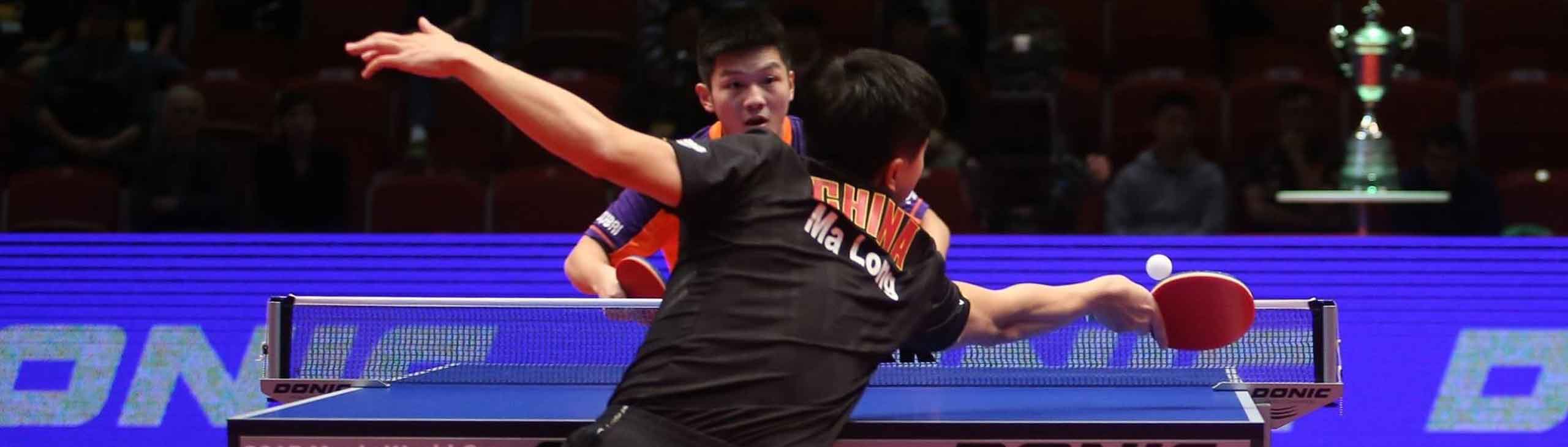
In fast-paced dynamic sports, an athlete’s ability to process sensory information and adapt within milliseconds dictates peak performance. This adaptability hinges on “preparatory set”—the brain’s capacity to configure motor networks before an action begins. While traditional behavioral metrics measure reaction speed, subtle physiological signals may offer a direct window into cognitive effort. A landmark study in Biology of Sport by Jui-Tai Chen, Yi-Hsuan Chang, Cesar Barquero, and Chin-An Wang explores how open-skill athletes manage cognitive load and motor preparation compared to non-athletes.
The study evaluated 40 university-level open-skill athletes (table tennis, tennis, and badminton players with years of competitive experience) and 40 non-athletes. Open-skill sports require continuous real-time decision-making in unpredictable, fast-changing environments. Because their training constantly demands rapid response selection and inhibitory control, these athletes are uniquely suited for studying neural efficiency in motor planning.
Pro-Saccade and Anti-Saccade Methodology
Eye position and high-resolution pupil dynamics were tracked using an EyeLink 1000 Plus system recording binocularly at 1000 Hz, with head position stabilized via a chin rest. EyeLink technology provided precise pupil diameter and gaze measurements.
Participants completed 180 trials of an interleaved pro- and anti-saccade task:
- Fixation and Cue (1400 ms): A central fixation point appeared. Its color instructed participants to prepare for either a reflexive look toward a future target (pro-saccade) or to suppress that reflex and look in the opposite direction (anti-saccade).
- Gap Period (200 ms): The fixation point vanished briefly, creating a blank gap to trigger active motor preparation.
- Target and Execution: A peripheral target dot appeared, and participants executed the designated eye movement.
From Pupil Signals to Athletic Efficiency
The findings reveal a clear pipeline linking physiological pupil responses to motor execution and athletic performance:
- Executive Control Increases Pupil Dilation: Preparing for an anti-saccade triggered significantly larger short-term (phasic) pupil dilation than a pro-saccade. Because oculomotor brain networks directly modulate pupil size, this larger phasic response captures the heightened cognitive load and top-down control required to suppress a reflexive response.
- Pupil Dynamics Drive Movement Timing and Vigor: Across all participants, trials with larger phasic pupil dilation and smaller baseline (tonic) pupil size produced faster eye movement initiation. While phasic dilation tracks active cognitive load, tonic pupil size reflects baseline neural arousal. Larger phasic dilation also directly correlated with higher peak eye velocity without impacting landing accuracy. This demonstrates that pupil-linked neural signals specifically tune movement speed and initiation readiness rather than spatial precision.
- Athletes Achieve More with Less Effort: Crucially, open-skill athletes exhibited significantly smaller phasic pupil dilation during motor preparation than non-athletes. Despite expending less cognitive effort during movement planning, they maintained superior speed and performance.
Pupil dynamics act as a dual gauge for cognitive load (phasic dilation) and underlying arousal (tonic size) during movement preparation. Ultimately, open-skill athletes display remarkable neural efficiency: they engage key motor-planning circuits more economically, generating faster, higher-velocity actions with less mental strain. High-precision eye tracking like the EyeLink 1000 Plus provides sports scientists with an objective, non-invasive window to evaluate cognitive load and athletic readiness in real time.
For information regarding how eye tracking can help your research, check out our solutions and product pages or contact us. We are happy to help!