

Case Study: Using EyeLink Eye Tracking to Understand Translation
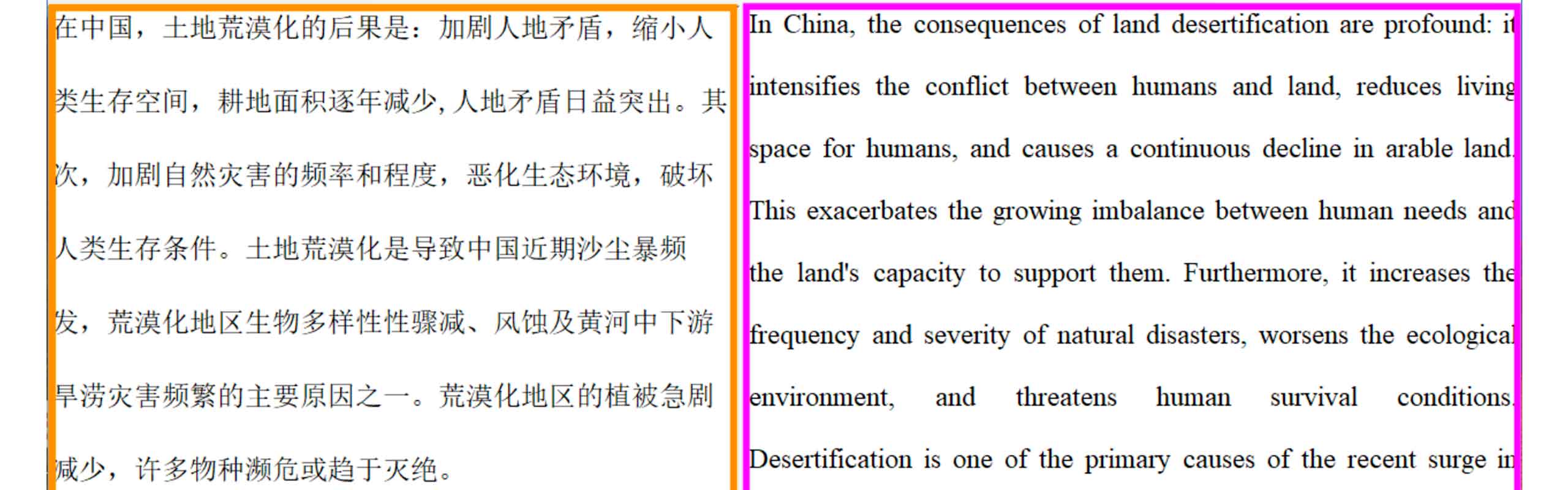
Translation is far more than simply converting words from one language into another. Professional translators continuously move between reading, comprehension, target-language production, revision, and monitoring. A recent study by Yiyu Zhang, Xiajing Yao and Dechao Li, Reading to Translate or Translating to Read? Modeling Translators’ Eye Movements with Multilingual Pre-Trained Models, used EyeLink eye tracking technology to investigate how translators allocate their attention during translation and post-editing tasks.
Studying the Translation Process with EyeLink Eye Trackers
Native Chinese-speaking translators participated in the study, completing both English-to-Chinese and Chinese-to-English tasks. They performed two types of activities: translation, in which they produced a target text (the translation) directly from the source text (the original text being translated), and post-editing, in which they reviewed and corrected a machine-generated translation to improve its accuracy, fluency, and overall quality.
Eye movements were recorded using the EyeLink 1000 Plus in remote mode at a sampling rate of 1000 Hz. As shown in the above image, the experimental interface displayed source text on the left side of the screen and target text on the right, allowing researchers to separately analyze:
- Source Text Reading Time – The time a participant spends looking at and reading the original text that is being translated. Longer source reading times generally indicate increased comprehension effort or greater processing demands.
- Target Text Reading Time – The time a participant spends reading the translated text that is being produced or revised. This measure reflects activities such as monitoring, evaluating, and checking the quality and accuracy of the translation.
- Target Text Production Duration – The time spent producing or revising the translated text. This measure includes planning, typing, editing, and revision activities and provides an indication of the effort involved in creating the final translation.
EyeLink’s high temporal resolution captured rapid shifts in attention as participants moved between reading and writing. Eye movement data were synchronized with Translog-II keystroke logging software, enabling researchers to connect gaze behavior with typing, editing, and revision activities.
Key Findings
Source Text Reading
Across both translation and post-editing tasks, EyeLink data showed that participants spent more time reading source text segments that required greater processing effort. During translation, source reading supported comprehension and problem solving before producing the target text. During post-editing, participants continued to consult the source text to verify the accuracy of the machine-generated translation and identify necessary changes. Overall, source text reading remained central to both tasks, although its role shifted from comprehension during translation to verification during post-editing.
Target Text Reading
Target text reading reflected how participants monitored and evaluated the translation.In translation tasks, participants frequently reviewed their own output to check meaning and fluency as they wrote. In post-editing tasks, participants evaluated machine-generated translations to identify errors, awkward phrasing, and inaccuracies. Across both tasks, target text reading served as a quality-control process that supported ongoing evaluation and refinement of the translation.
Target Text Production
Target text production duration reflected the time participants spent generating and revising the final translation. In translation tasks, this involved composing the target text from the source, with frequent alternation between planning, typing, and revising. In post-editing tasks, while the presence of a draft reduced the need for full sentence generation, participants still engaged in substantial editing, correction, and restructuring of the output. In both tasks, EyeLink and keystroke data showed that participants continuously moved between reading, writing, and revising throughout the task.
Modeling Translators’ Eye Movements with Multilingual Pre-Trained Models
Beyond measuring eye movements, the study explored whether multilingual language models capture some of the same linguistic challenges experienced by human translators.
The results showed a clear relationship between model-estimated difficulty and translator behavior. Text segments associated with greater uncertainty often produced longer reading times, increased re-reading, and longer production times.During source text reading, more difficult segments attracted greater visual attention. During target text production, increased uncertainty was associated with greater planning and revision effort.
Although these models do not predict eye movements directly, the findings suggest that they reflect some of the same sources of linguistic difficulty experienced by human translators. Eye tracking remains essential for directly measuring these cognitive processes and understanding how translators read, evaluate, and produce text.
For information regarding how eye tracking can help your research, check out our solutions and product pages or contact us. We are happy to help!
Image Reference
Experimental stimulus showing source and target text. Adapted from Zhang et al. (2026).
Note. Adapted from Reading to Translate or Translating to Read? Modeling Translators’ Eye Movements with Multilingual Pre-Trained Models, by Y. Zhang, X. Yao, and D. Li, 2026, Journal of Eye Movement Research, 19(3), Article 66. https://doi.org/10.3390/jemr19030066. Copyright 2026 by the authors. Distributed under the Creative Commons CC BY license.