

Eye tracking technology has become an essential tool in sports psychology research, providing objective insights into visual perception, attentional allocation, and perceptual-cognitive expertise. By capturing precise eye movement dynamics during athletic performance, researchers can uncover how visual strategies distinguish elite performers from novices. Understanding these visual behaviors helps optimize athletic training protocols, assess cognitive load, and evaluate neurocognitive recovery following sport-related injuries.
The Best Eye Trackers in Sport Research
SR Research EyeLink systems provide unmatched spatial precision and exceptionally high sampling rates, making them the ideal choice for capturing fast, subtle gaze dynamics in sports science. Researchers utilize the benchtop EyeLink 1000 Plus for high-speed laboratory setups, the portable EyeLink Duo for flexible field and lab testing, and advanced wearable solutions like the EyeLink 3 to track real-time visual behavior and eye-head coordination during unconstrained motor execution.
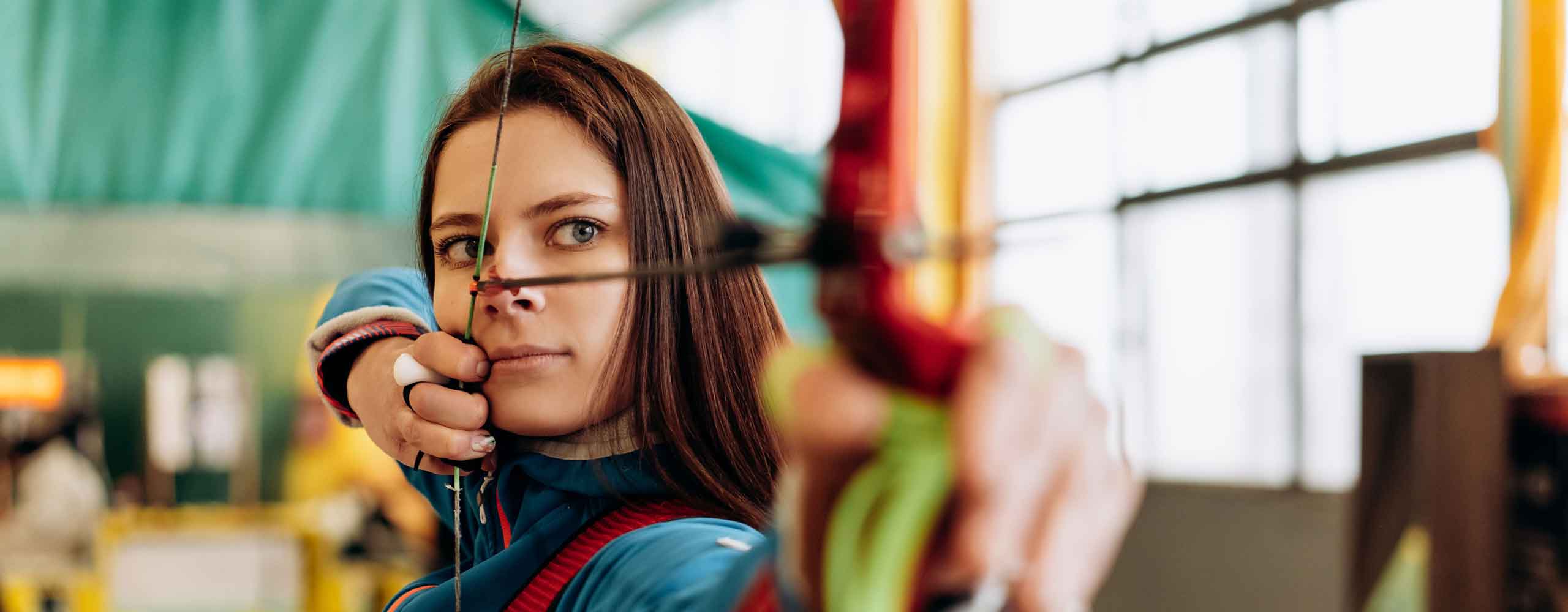
- Quiet Eye Duration: Researchers evaluate the prolonged final fixation on a target prior to movement execution to examine how attentional control enhances motor precision during aiming tasks like dart throwing or shooting.
- Sport-Related Concussion Assessment: Investigators record subtle impairments in smooth pursuit gain and saccadic latencies to objectively track neurocognitive disruption and clinical recovery in contact sport athletes.
- Tactical Decision-Making: Studies analyze visual search patterns during complex gameplay scenes to identify how elite players recognize visual cues and execute rapid tactical decisions in team sports.
- Inhibitory Control and Antisaccades: Psychologists employ pro-saccade and anti-saccade paradigms to measure how athletes suppress reflexive eye movements to maintain cognitive focus under pressure.
- Dynamic Visual Acuity: Research quantifies smooth pursuit tracking while athletes view fast-moving targets to determine how oculomotor performance influences dynamic target perception.
- Microsaccade Behavior: Scientists measure fine-scale fixation movements to index covert attention shifts and mental preparation states prior to rapid motor execution.
- Visual Search and Distraction: Experiments test how auditory or visual distractors alter fixation counts and durations to evaluate visual search resilience in expert athletes.
- Visuomotor Skill Acquisition: Studies monitor gaze stabilization adaptations and vestibular ocular reflex suppression to track perceptual-cognitive development during sport skill training.
- Fatigue Monitoring: Scientists investigate how physical and mental exhaustion impact visual reaction times during prolonged sport performance.
Case Study Examples of EyeLink Eye Trackers in Sports Research
Powerful Eye Tracking Software Solutions
These eye trackers feature seamless integration with SR Research’s powerful proprietary software suite—Experiment Builder for complex task creation, WebLink for web-based studies, and Data Viewer for extensive data analysis. Furthermore, these eye trackers offer robust integration with numerous third-party software packages and external biometric devices, such as EEG or motion capture systems, creating a synchronized ecosystem. EyeLink systems also offer seamless compatibility with popular third-party stimulus presentation software, including PsychoPy, E-Prime, MATLAB with Psychtoolbox, and Presentation, ensuring maximum flexibility for any research design.
With their software solutions, accuracy, and flexibility, EyeLink eye trackers are the perfect choice for researchers dedicated to advancing sports research.
For further information regarding how SR Research eye trackers can help your research, please contact us. We are happy to help! For peer-reviewed published research with EyeLink eye trackers, see our extensive list of publications and our case studies.